
Quick Wins: Decluttering Projects You Can Finish in Under an Hour
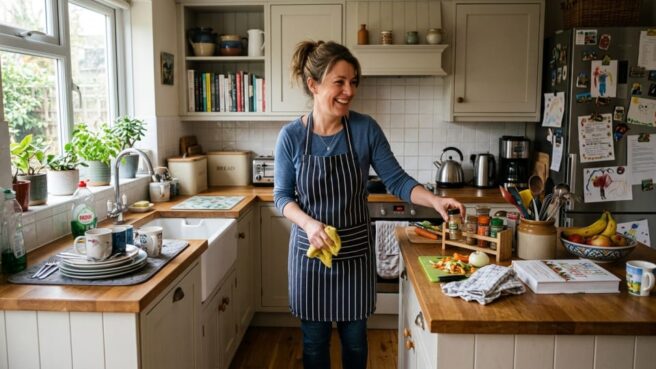
If the word “decluttering” makes you want to close the tab and put the kettle on instead, you are absolutely not alone. Between everything family life throws at you, finding a full free day to sort the house feels like a fantasy. The clutter just… accumulates. A drawer here, a shelf there, and suddenly the whole house feels like it’s closing in.
Here’s the thing though — you don’t need a full day. You don’t need a system, a colour-coded spreadsheet, or a weekend clear-out to make a real difference. What you need is about 45 minutes, a bin bag, and a bit of momentum. Small wins genuinely do add up, and that feeling of opening a tidy drawer or finding a clear surface? It’s surprisingly powerful.
Below are six simple decluttering projects, each one achievable in under an hour, designed for real family homes and real Irish mams who are doing their best with the time they’ve got.
1. The Junk Drawer (20–30 minutes)
Every home has one. That drawer where batteries, takeaway menus, birthday candles, random keys, and three dried-up biros all live together in chaos. It’s the drawer you shove things into when guests are arriving and you haven’t time to think.
Pull everything out onto the kitchen table. Throw away anything broken, dried up, or mystery-origin. Group what’s left — batteries together, pens tested and sorted, actual useful bits kept. A few small boxes or even old mugs can act as dividers. You’ll be amazed how satisfying it is to close that drawer knowing what’s inside it.
2. The Bathroom Cabinet (20–30 minutes)
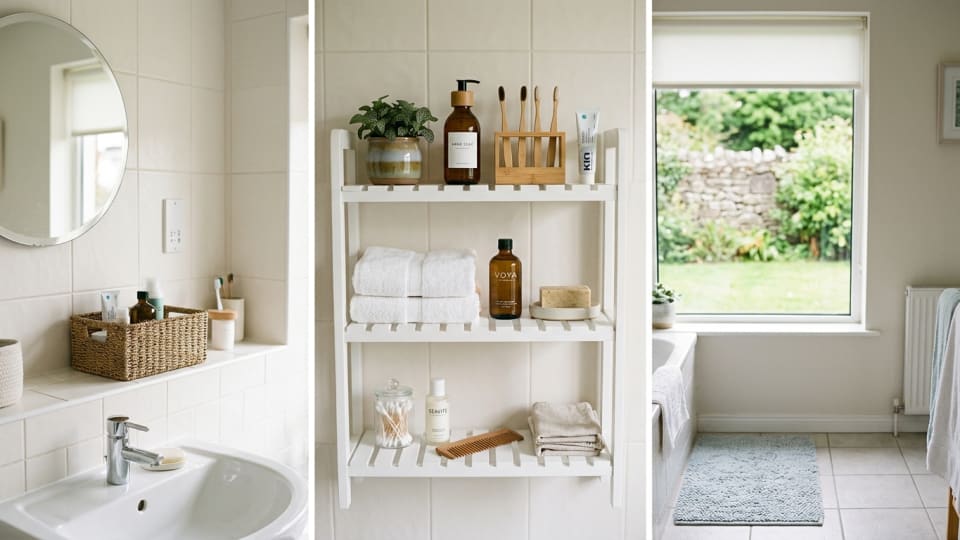
Bathroom cabinets have a way of quietly hoarding things — out-of-date medicines, nearly-empty bottles kept “just in case,” three different half-used moisturisers, and products from a holiday two summers ago. It all adds up.
Check expiry dates on medications and dispose of them safely (your local pharmacy can help with this). Chuck anything that’s genuinely past it. Consolidate duplicates, and keep only what you actually use. A clear cabinet means a calmer morning routine, which is worth its weight in gold when you’re trying to get everyone out the door.
3. The Kids’ Coat Hooks and Shoe Area (30–45 minutes)
This spot near the front door tends to become the most stressful square metre in the house. Coats that don’t fit anymore, shoes in the wrong sizes, football boots from last season, three odd gloves but no matching pairs. It’s the first thing you see when you come home and the last thing you see when you’re leaving in a rush.
Take everything off the hooks and out of the shoe rack. Try coats on children if they’re around — anything too small goes straight to a bag for donating or passing on. Match up shoes, set aside anything outgrown, and give each child only what they actually need on the hooks right now. This one project can transform the feel of your whole morning routine.
4. The Kitchen Counter (20–30 minutes)
Counters attract clutter like magnets — post that needs sorting, school permission slips, charging cables, fruit that’s seen better days, random toys that migrated from the sitting room. A cluttered counter can make even a clean kitchen feel chaotic.
Clear everything off completely. Wipe the surface down. Then only put back what genuinely belongs there and gets used daily. Post goes into a folder or a specific spot. Random items get returned to their proper homes. You’ll find yourself breathing a little easier every time you walk into the kitchen.
5. One Shelf in the Kids’ Room (30–40 minutes)
Just one shelf — not the whole room, not the entire toy situation, just one shelf. It’s a much less daunting task, and it still makes a meaningful difference. Pick the most chaotic shelf and sort through it together with your child if they’re old enough, or while they’re occupied elsewhere if they’re at the age where “helping” makes things harder.
Books that are too young for them can be passed on or donated. Toys they’ve genuinely grown out of can be bagged up. Keeping children involved in decluttering their own space also helps them feel a sense of ownership over their room — a skill that’ll serve them (and you) well as they get older.
6. Your Own Wardrobe — Just the Tops (20–30 minutes)
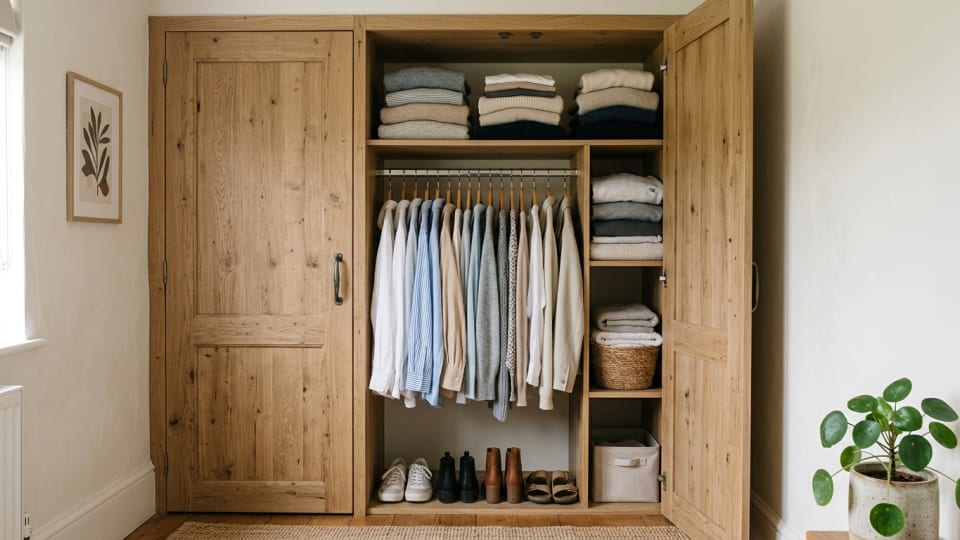
Not your whole wardrobe — just the tops. Jumpers, t-shirts, blouses. Pull them out, have a quick honest look, and set aside anything you haven’t worn in over a year, anything that doesn’t fit comfortably, or anything you keep skipping over when you’re getting dressed. Those items are taking up space and quietly making your mornings harder by clogging up what should be an easy choice.
Pop the discards into a bag for a charity shop — there are plenty of great ones across in your locality who’d be glad of them. What’s left should be things you actually like and wear. It sounds simple, but having a more intentional wardrobe, even just the tops section, can genuinely shift your mornings.
A Few Things Worth Remembering
Clutter in a family home isn’t a sign of failure — it’s a sign of a full life. Things accumulate because life is busy and children are constantly growing and changing, and keeping on top of it all while juggling everything else is genuinely hard. You don’t need to be perfectly tidy all the time. You just need a few moments here and there to reset.
Decluttering in small bursts works because you finish what you start. There’s a completed task, a visible result, and that little lift of satisfaction that comes with it. That feeling is what builds momentum for the next small project, and the one after that.
Many parents find it helps to keep a donation bag somewhere accessible — a corner of the utility room or the boot of the car — so that when something is outgrown or no longer needed, it goes straight in rather than back into the clutter pile.
Pick Just One and Start Today
You don’t have to do all six. You don’t have to do two. Just pick one — the one that’s been bothering you most, or the one that feels most manageable right now — and set a timer for an hour. That’s it. One drawer, one shelf, one corner of the house a little bit lighter than it was before.
Small steps, taken consistently, are what actually change a home. And you’ve got this.