
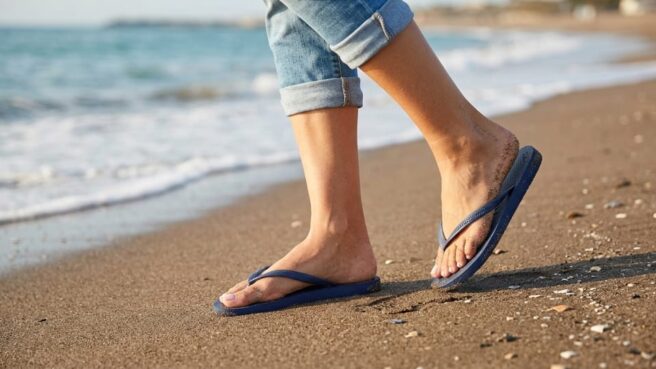
Hailey Bieber’s flip flop trend comes with a serious health warning
Hailey Bieber has a lot to answer for. The minimalist summer aesthetic she’s been sporting — barely-there sandals, heeled flip flops, effortless coastal girl energy — has sent searches for “heeled flip flops summer trend” surging by more than 5,000% in the past week alone. Yes, five thousand per cent. We’re all guilty of clocking a celebrity look and immediately opening a new tab.
The problem? Footwear experts are now wading in with a fairly stern word of warning about the style, and it’s worth a read before you commit to a full summer of flip-flopping around.
The heeled flip flop issue
Specialists at Elevate Your Sole are pointing out that the fashion appeal of heeled flip flops doesn’t necessarily line up with what your feet actually need. “Heeled flip flop styles combine elevation with minimal structural support, placing the foot in a less stable position,” they explain. “This combination can alter balance and increase pressure on the forefoot, particularly during prolonged wear or when walking on uneven surfaces.”
And if you’re planning to wear them on cobbled streets or across any terrain that isn’t a perfectly smooth pavement, the experts are asking you to reconsider. “Uneven ground, cobbled streets, slippery areas, grass, or rough terrain can reduce stability and increase pressure on the feet and ankles,” they warn. Basically, that weekend festival or a casual stroll around a market? Your flip flops are not your friends.
What your feet are actually dealing with
Musculoskeletal Physiotherapist Physio Ric doesn’t mince his words either. He treats patients with foot and ankle pain throughout the summer months, and flip flops come up regularly. “They provide minimal arch and heel support,” he says. “Over time, this can affect the kinetic chain, contributing to secondary issues such as hip and knee pain.”
There’s also the toe-gripping issue — something that sounds minor but apparently isn’t. “They tend to encourage less efficient walking patterns, as the toes grip the sole to keep the footwear in place. This can increase strain through the plantar fascia and Achilles tendon, particularly during prolonged use in warmer months when activity levels often increase.”
The Elevate Your Sole team adds that thin, flexible soles mean very little shock absorption, so the impact from walking transfers more directly through your feet and lower limbs. Do that all day and you’ll feel it.
So can you still wear them?
Nobody is telling you to bin your flip flops entirely. The advice is more about being smart with them. Short trips, beach days, nipping to the shop — totally fine. Wearing them as your primary footwear from June through August while also wondering why your heels are destroyed by September? Less fine.
The experts suggest keeping an eye out for early warning signs: heel pain, arch fatigue, calf soreness, or general foot discomfort by the end of the day. If any of those sound familiar, your footwear might not be keeping up with how much you’re actually on your feet.
After a long day in flip flops, rest, gentle stretching, or switching into something more supportive can help. And for any occasion that involves serious walking, the recommendation is clear: look for sandals with secure straps, contoured footbeds, and built-in arch support. Less Hailey Bieber, more actually comfortable.
The minimalist aesthetic is genuinely lovely. Your plantar fascia, though, has opinions.