Lidl becomes first Irish supermarket to commit to fibre strategy
If you're riding the January health kick wave like the rest of us, you'll be pleased to know there's a new player in town making it easier to actually stick to those wellness goals. Lidl Ireland has just become the first supermarket in Ireland to announce a dedicated fibre strategy, and honestly, it's about time someone tackled this.
The retailer announced last week that it's committing to increase the tonnage of total fibre sold by 20% and boost wholegrain volume to 20% of total grains by 2030. They've also partnered with registered dietician Orla Walsh, who's been working behind the scenes for the past year reviewing Lidl's entire product range.

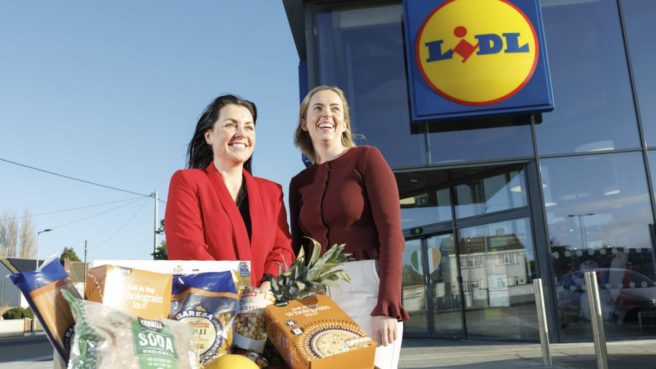
Elaine O'Connor and Orla Walsh
Ireland's Fibre Crisis
Here's the wake-up call: according to the Food Safety Authority of Ireland, around 80% of people in this country are fibre deficient. We're eating just 18 grams of fibre per day on average when we should be getting 25-35 grams. That's quite a gap.
The kicker? New research commissioned by Lidl found that nearly two thirds of us (63%) don't actually know what the recommended daily fibre intake is. Yet almost half of adults (47%) reckon they're eating enough fibre anyway. That confidence might be a bit misplaced.
The research revealed some interesting patterns too. Middle-aged women (35-54 year olds) were most likely to admit they weren't confident about their fibre intake (55%), as were parents (49%). Meanwhile, younger men aged 18-34 were the most confident, with 58% saying they're getting enough. Whether that confidence is justified is another matter entirely.
What's Actually Changing?
Working with Orla Walsh and local Irish suppliers, Lidl has already reformulated 30 products to boost their fibre content. More products will follow throughout 2026, with items being labelled as 'High in Fibre' or 'Source of Fibre' where they meet the criteria.

Elaine O'Connor and Orla Walsh
The idea is simple: make everyday products healthier without compromising on taste or hiking up prices. No one wants to feel like they're eating cardboard just because it's good for them.
"It only takes a little extra fibre to make a big difference," Orla Walsh explained. "Increasing fibre intake by just 8 grams per day has been shown to reduce the incidence and mortality rates of diseases such as coronary heart disease, type 2 diabetes and colorectal cancer potentially by 5-27%."
That's actually significant when you think about it. Small changes, potentially big health payoffs.
Why Fibre Matters (Especially for Busy Mums)
Let's be honest, when you're juggling school runs, work deadlines and trying to get something resembling dinner on the table, thinking about fibre content isn't exactly top of mind. But here's why it should at least be somewhere on the list.
Most of us are getting our fibre from breakfast cereals (51%), bread (22%), porridge or oats (19%), fruit like bananas and apples (18%) and vegetables including broccoli and potatoes (17%). So we're sort of on the right track, just not quite hitting the target.
The research found that women are more likely to cite personal food preferences as their reason for not eating more fibre (21%), whilst men tend to think high-fibre foods cost more (20%). And 1 in 10 people? They admitted they just can't be bothered. Fair enough.
Labels That Actually Help
When it comes to health claims on packaging, 'High in Protein' tops the list of what people look for (47%), followed by 'Reduced Sugar' (45%) and 'High in Fibre' (39%). The good news is that 70% of people said they'd be more open to buying a product labelled 'High in Fibre' than one without it.
Kevin Duffy, Chief Commercial Officer at Lidl Ireland, said they're committed to "supporting healthy and sustainable diets" and that being the first Irish retailer to take this kind of action is something they're proud of.
Elaine O'Connor, Head of Sustainability at Lidl, added that the partnership with Orla Walsh has been "instrumental" in developing the fibre commitment in a way that's both practical and sustainable.
So if you're trying to make better choices this January (or any month, really), at least one supermarket is now making it a bit easier. And you won't need to become a nutrition expert to figure out which products might actually be doing you some good.