
The September Skin Hangover Is Real — Here’s What to Do
The tan is fading. The memories of whatever approximated as a summer are fading. But something else is arriving right on cue as we head into September — and a leading Irish skin expert wants you to pay attention to it before you do anything drastic.
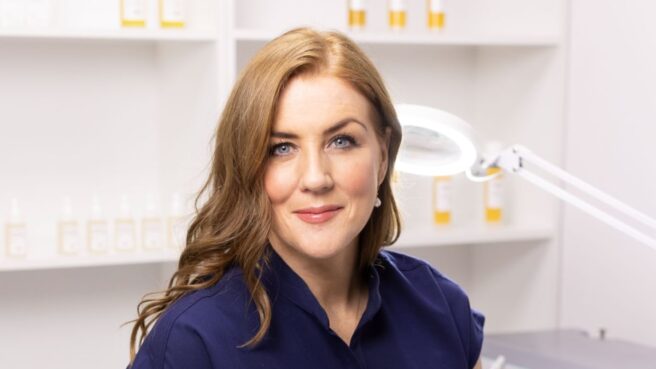
Eavanna Breen, Clinical Director of the Eavanna Breen Skin and Laser Clinic in Dublin 2, has a name for what many of us will clock in the mirror over the coming weeks: the September skin hangover. Think darker freckles, more defined brown spots, patches across the cheeks, forehead and upper lip that somehow look far more obvious than they did back in June. You didn’t imagine it. Your skin has been quietly cataloguing every sunny commute, every afternoon sitting near a window, every ordinary day outdoors — and September is when the bill lands.
It’s not all the same thing (and that matters more than you’d think)
Here’s where Eavanna’s warning gets genuinely useful. Not all pigmentation is created equal and reaching immediately for the strongest brightening serum, acid or laser treatment is, she says, exactly the wrong move. A major international study published in the Journal of Investigative Dermatology surveyed 48,000 adults across 34 countries and found that one in two reported at least one pigmentary disorder. Sun spots were the most common at 27.5%, followed by post-inflammatory hyperpigmentation at 14.8% and melasma at 10.9%. They can all look broadly similar. They don’t all respond to the same treatment.
“The biggest mistake is assuming they are all the same thing and immediately trying to erase them,” says Eavanna. “A defined sun spot and melasma are very different problems. Treating pigmentation more aggressively does not automatically give a better result, and the wrong approach can aggravate the skin.”
For context: solar lentigines are flat defined spots linked to cumulative UV exposure. Freckles deepen in summer and can fade again. Post-inflammatory hyperpigmentation is what lingers after inflammation — acne, irritation, some treatments. Melasma is different again: larger, often symmetrical patches where hormones and even visible light play a role alongside UV. “If someone comes into my clinic with pigmentation, my first question is not ‘What laser are we going to use?’ It is ‘What type of pigmentation is this?'” Eavanna explains.
You wore SPF. So why is it still happening?
This is the part that catches most people off guard. UV exposure is cumulative — it builds up over a lifetime of ordinary days, not just beach holidays or the one afternoon you forgot sunscreen. Sunscreen reduces exposure significantly when used properly, but it doesn’t make skin completely immune. “What appears in September may be the visible result of repeated exposure over the summer, not one dramatic burn,” says Eavanna. “The skin remembers all of those ordinary days.”
It’s worth noting that more than 75% of the Irish population falls into Fitzpatrick skin types I and II. Fair skin burns easily, tans poorly and has less protective melanin, making cumulative UV damage show up as pigmentation and premature ageing. It also increases skin cancer risk, which is why Eavanna is clear that any new, changing, bleeding or itching mark should be seen by a GP or dermatologist before any cosmetic treatment is considered.
For anyone dealing with melasma specifically, she also flags that SPF numbers alone may not tell the full story. Research has shown that visible light can contribute to melasma-prone pigmentation, and tinted sunscreens containing iron oxides can offer an additional layer of visible light protection. “I often recommend a tinted sunscreen containing iron oxides for pigmentation-prone skin,” she says, highlighting AlumierMD Sheer Hydration Versatile Tint as her clinic’s recommendation.
Eavanna’s four-step September skin reset
If you want a clear, practical framework rather than a panic-buy basket full of serums, here’s what Eavanna recommends as September approaches:
-
Assess it. Actually look at what has changed — pigment, redness, texture, hydration, sensitivity. A professional consultation can identify what you’re dealing with. Any suspicious lesion goes to a GP or dermatologist first, full stop.
-
Protect it. Broad spectrum, high-factor SPF every single day, applied correctly. For melasma-prone skin, consider a tinted formula with iron oxides for added visible light protection.
-
Repair it. If skin feels dehydrated, tight or reactive, sort the barrier first before layering on actives. Eavanna recommends Skinmade personalised moisturiser, formulated following an individual skin measurement. You can book a free skin test here.
-
Correct it. Only once the skin has been assessed and the barrier is stable should correction begin. Depending on the concern, options include IPL for excess pigmentation, Laser Genesis for redness and vascular changes, and microneedling for texture and collagen remodelling. Melasma needs its own individual plan.
The statistic that perhaps says it all: in that 34-country study, 69.5% of people with a pigmentary disorder said it had been present for at least five years. “People are often sold the idea that one product or one treatment will erase pigmentation forever,” says Eavanna. “Sometimes we achieve excellent results, but particularly with melasma, the honest goal is often control and long-term management rather than chasing a permanent quick fix.”
September is coming for your skin whether you’re ready or not. The good news is that with the right information, you can actually do something useful about it — rather than throwing money at products that weren’t right for your skin in the first place.